Posts

Showing posts with the label DIVORCE LAWYERS IN TAMPA

5 Things You Need To Know About Divorce Law in Florida

Image
  Introduction Welcome to Frey Law pa, your trusted partner in navigating the intricate landscape of divorce law in the Sunshine State. We understand that divorce is a complex and emotional journey, and our team of expert Divorce Lawyers in Tampa is here to guide you through the process seamlessly. Understanding the Grounds for Divorce in Florida In the state of Florida, understanding the grounds for divorce is crucial. Florida is a no-fault divorce state, meaning that neither party needs to prove fault to dissolve the marriage. This can expedite the process and reduce unnecessary conflict. Our skilled Divorce Lawyers at Frey Law pa are well-versed in the nuances of Florida's divorce laws and can ensure a smooth and efficient resolution for your case. Division of Assets and Liabilities One of the key aspects of divorce is the division of assets and liabilities. In Florida, the court follows the principle of equitable distribution, aiming for a fair, though not necessarily equal, ...
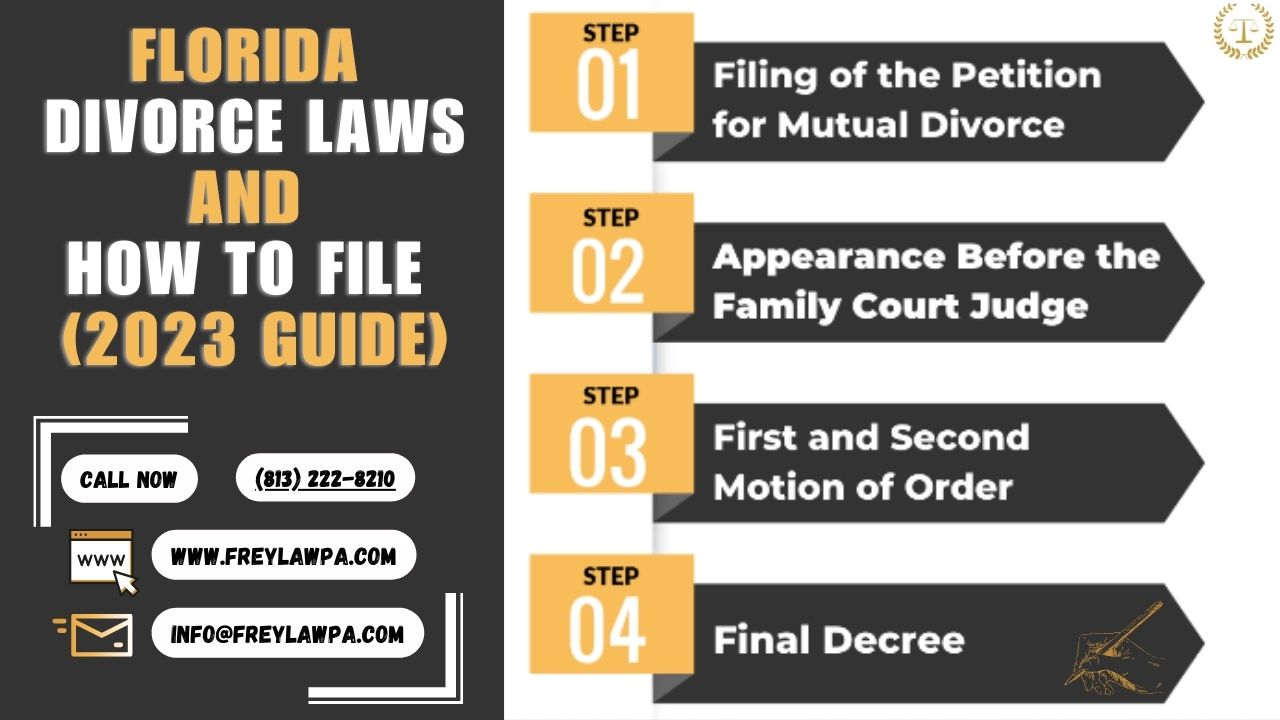
Florida Divorce Laws & How To File (2023 Guide)

Image
  Understanding Florida Divorce Laws Divorce is a complex legal process, and understanding the specific laws governing it in Florida is crucial for a seamless dissolution. Florida divorce laws are designed to ensure fairness and protect the rights of both parties involved. If you're considering a divorce in Tampa, having experienced and knowledgeable Divorce Lawyers in Tampa can make all the difference. Grounds for Divorce in Florida Florida is a no-fault divorce state, meaning that neither party needs to prove the other did something wrong to file for divorce. Instead, the only requirement is that the marriage is "irretrievably broken." This streamlined approach aims to simplify the divorce process, allowing couples to focus on resolving issues like property division, alimony, and child custody. Residency Requirements Before filing for divorce in Florida, it's essential to meet residency requirements. At least one of the parties must have lived in the state for six ...